Epoxy Resin & Furniture Store

Epoxy on Skin – Safety, Risks, and What to Do If It Happens U.S.A

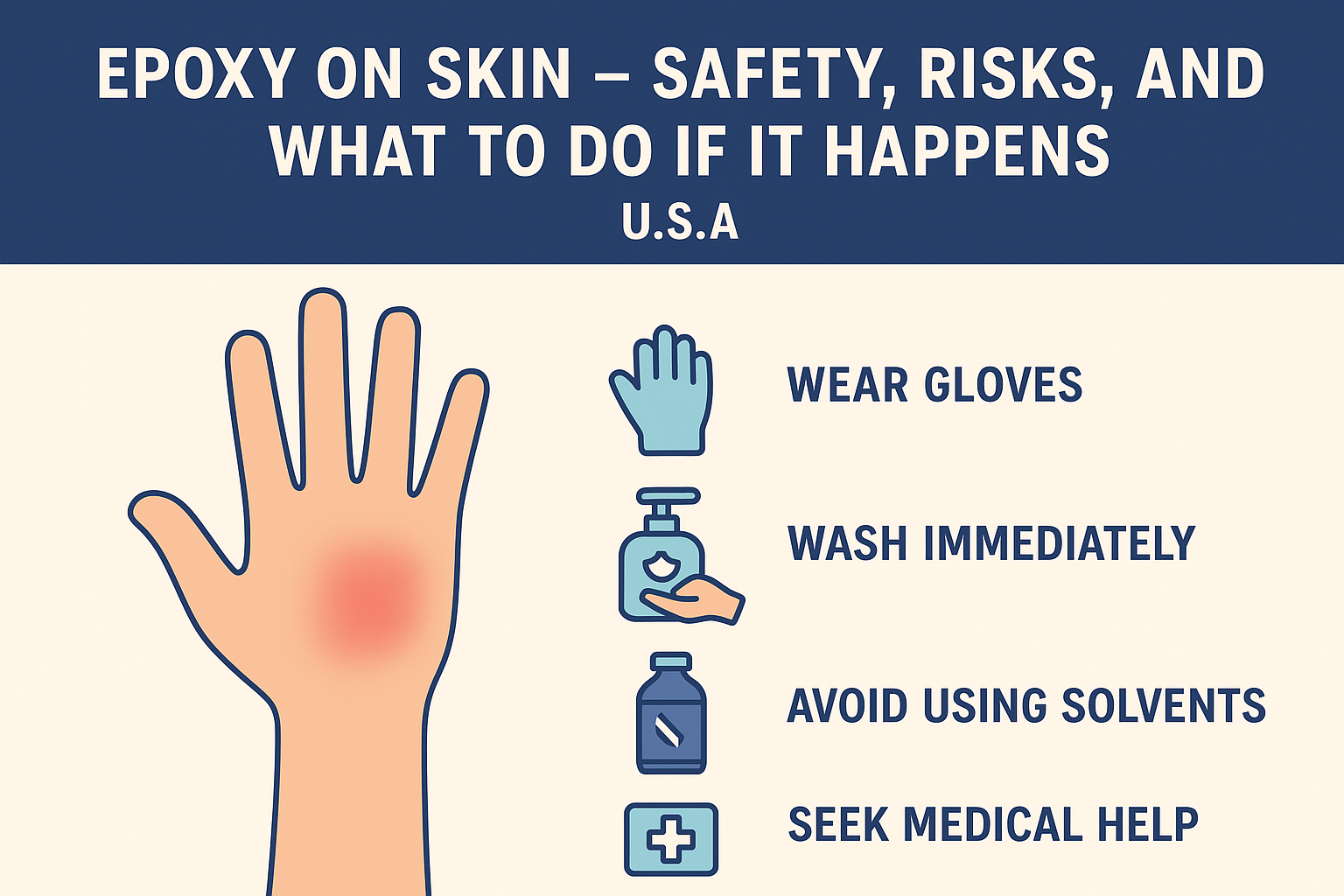
Introduction
Epoxy resin is a two-part system — typically a resin and a hardener — that, when mixed, cures into a tough, glossy plastic. It’s beloved by makers, artists, builders, and manufacturers because of its strength, clarity, and versatility: epoxy can make river tables that look like liquid glass, seal and protect artwork, bond heavy materials in construction, and form durable coatings for floors, countertops, and jewelry. In short, epoxy lets people turn imagination into long-lasting, polished reality.
That popularity also means a lot of hobbyists and professionals are handling uncured epoxy every day — and that’s where the risk comes in. Uncured epoxy is chemically active. When it touches the skin it can cause everything from temporary irritation (redness, itchiness or a sticky feeling) to more serious problems like chemical burns or allergic contact dermatitis. Even small, repeated exposures can sensitize someone over time so that future contact produces stronger reactions.
This article focuses squarely on epoxy on skin — what it is, why it can be harmful, and practical, U.S.-focused steps you can take to prevent and treat exposure. I’ll walk you through plain-language safety advice (what to wear, what to keep nearby), step-by-step guidance for immediate first aid if resin gets on your skin, and when it’s important to contact medical professionals or Poison Control in the United States. Whether you’re a weekend crafter finishing your first resin coaster, a jeweler working with tiny pours, or a tradesperson using epoxy adhesives on the job, this guide will help you keep your hands — and health — intact while you create.
What Is Epoxy Resin?
Epoxy resin is a two-component chemical system made up of a resin and a hardener. When these two liquids are mixed together, a chemical reaction called curing begins — transforming the mixture from a sticky, fluid substance into a solid, durable, and glass-like material. This reaction is exothermic (it gives off heat) and once cured, the material becomes waterproof, impact-resistant, and crystal clear — ideal for both artistic and industrial applications.
In simple terms:
- The resin provides the body and clarity.
- The hardener triggers the chemical bond that turns it solid.
Together, they create one of the strongest and most versatile materials available to creators and builders.
Common Uses of Epoxy Resin
Epoxy is used in an incredible range of industries and hobbies across the United States. Here are the most popular applications:
- 🎨 Art & Crafts: Artists use epoxy resin for coating paintings, creating resin art, river tables, and encapsulating flowers or photos. Its glass-like finish makes artwork look premium and vibrant.
- 🪵 DIY & Furniture: Makers pour epoxy into wood slabs to create unique furniture pieces like river tables, countertops, or decorative wall art.
- 💍 Jewelry & Accessories: Small molds filled with colored resin create pendants, rings, and earrings that are durable and lightweight.
- 🧱 Construction & Industrial Use: Epoxy adhesives bond concrete, metal, and wood in building, flooring, and automotive repairs because they resist heat, water, and chemicals.
- 🧽 Protective Coatings: It’s often used as a floor coating in garages, warehouses, and hospitals due to its shiny, easy-to-clean, and tough surface.
Why Epoxy Resin Is So Popular in the U.S.
In the United States, epoxy resin has become a go-to material for both creative and practical projects. The “maker movement,” fueled by platforms like YouTube, TikTok, and Etsy, has inspired thousands of people to explore resin art at home. The material’s affordability, accessibility, and visual appeal make it especially attractive to hobbyists.
For professionals, epoxy’s strength, chemical resistance, and versatility make it indispensable in industries from construction to aerospace. Whether you’re an artist pouring a custom coaster or a contractor sealing an industrial floor, epoxy resin offers durability, flexibility, and beauty in one package — which is why it’s earned a permanent place in American workshops and studios.
What Happens When Epoxy Gets on Skin?
When uncured epoxy resin comes into contact with your skin, it may seem harmless at first — it’s just a little sticky, right? But underneath that glossy surface, a chemical reaction is happening that can irritate or even damage your skin’s natural barrier. Whether it’s a small drop on your hand or a larger spill on your arm, epoxy should never stay on your skin for long.
Immediate Effects: What You’ll Feel First
As soon as epoxy touches your skin, the first signs are usually stickiness and mild irritation. You might notice:
- A tight, sticky feeling as the resin begins to cure.
- Redness or slight burning if your skin is sensitive.
- Sometimes a mild itching sensation, especially around thin skin like wrists or fingers.
These early symptoms might fade after washing, but they’re a warning that your body is reacting to the chemicals — especially the hardener component, which can be more aggressive than the resin.
Short-Term Reactions: When Exposure Lasts Longer
If epoxy stays on your skin for more than a few minutes or gets trapped under clothing or gloves, the irritation can quickly worsen. Common short-term issues include:
- Contact dermatitis – red, inflamed, or dry patches that can sting or itch.
- Rashes or small blisters, similar to a mild allergic reaction.
- Chemical burns if the mixture begins curing on your skin (it generates heat during that process).
Even after washing, residue left behind can continue to irritate your skin for hours, especially if solvents are used incorrectly to remove it (we’ll cover that later).
Long-Term Effects: Sensitization and Allergic Reactions
The most concerning issue with epoxy exposure isn’t the first rash — it’s sensitization. Sensitization means your immune system becomes increasingly reactive to epoxy chemicals over time. Once this happens, even the smallest amount of uncured epoxy on your skin (or in the air as fumes) can trigger:
- Severe allergic dermatitis — painful rashes, swelling, and burning.
- Cracked or oozing skin on hands, wrists, or forearms.
- Permanent sensitivity, meaning you may no longer be able to work safely with epoxy at all.
This is why professionals and artists across the U.S. take epoxy safety so seriously — once your body becomes sensitized, there’s no easy cure. Preventing contact from the start is the best protection.
Why Even Small Exposures Matter
It’s easy to underestimate the danger of a few drops of resin on your skin, especially when you’re in the middle of a project. But each contact builds up over time. Your skin is porous and can absorb small amounts of uncured resin and hardener, allowing chemicals to enter deeper layers.
Even “minor” exposures can cause long-term sensitivity if repeated often enough. Think of it like a slow buildup — the more your skin interacts with epoxy, the higher your chances of developing an allergy that never goes away.
So, whether you’re crafting at home in California, building a countertop in Texas, or coating floors in New York, never ignore skin contact with epoxy. Quick action today prevents serious skin issues tomorrow.
Health Risks and Allergic Reactions
While epoxy resin is an incredible material for art, repair, and design, its chemical composition means that direct contact with skin can trigger several health issues — from mild irritation to severe allergic reactions. Understanding these risks is the first step to protecting yourself.
Common Symptoms of Epoxy Exposure
When epoxy or its hardener comes into contact with the skin, the body often responds with signs of irritation or allergy. These can appear within minutes or several hours after exposure, depending on your sensitivity level.
Common symptoms include:
- Itching or burning sensation
- Redness and inflammation around the contact area
- Swelling or puffiness, especially on hands and wrists
- Dry or cracked skin that looks like eczema
- Rashes or small blisters that may ooze or peel
Sometimes, people don’t notice symptoms until the next day, especially after multiple exposures. That delayed reaction can make it hard to identify epoxy as the cause — but repeated contact usually makes the symptoms worse each time.
Chemical Burns: A Hidden Danger
Epoxy resin and hardener can both cause chemical burns if left on the skin for too long. This happens because the curing process gives off heat and the chemicals can break down skin tissue. Signs of a chemical burn include:
- Severe redness or whitening of the skin
- Pain, heat, or stinging at the contact site
- Peeling or blistering, similar to a sunburn or scald
Even small areas of chemical burn can take weeks to heal and may leave permanent scars or discoloration. This is why removing epoxy immediately — and never using solvents like alcohol or acetone on your skin — is critical.
Sensitization: When Your Body Develops an Allergy
Sensitization is one of the most serious long-term health risks of epoxy exposure. Once your immune system becomes “sensitized” to epoxy components, it treats them like a dangerous allergen every time you’re exposed.
This means:
- Future contact can cause severe allergic dermatitis, even from trace amounts.
- Reactions can spread beyond the area of contact — sometimes affecting the face, eyelids, or neck.
- Symptoms may return even when you’re not actively working with epoxy, as your immune system stays on high alert.
Unfortunately, sensitization is permanent. Once it develops, you may never be able to handle epoxy safely again. That’s why proper protection (like gloves and long sleeves) is far better than risking chronic allergic reactions later.
When to Seek Medical Help
If you experience any of the following, it’s time to contact a healthcare professional right away:
- Persistent itching, swelling, or rashes that don’t improve after washing.
- Blisters, open sores, or chemical burns that become painful or infected.
- Severe allergic reactions such as widespread redness, hives, or difficulty breathing.
In the United States, you can:
- Call the Poison Control Hotline at 1-800-222-1222 for 24/7 expert advice.
- If exposure involves your eyes or large skin areas, go to the nearest emergency room immediately.
- For recurring rashes or suspected epoxy sensitivity, schedule an appointment with a board-certified dermatologist — they can perform allergy patch testing and recommend treatment.
Quick Tip – Don’t Self-Treat with Solvents
A common mistake is trying to remove epoxy from skin using acetone, alcohol, or vinegar. These can make things worse by breaking down your skin’s natural oils and allowing chemicals to absorb deeper. Instead, always wash affected areas with warm water and mild soap, and gently pat dry.
Even though epoxy-related reactions can sound alarming, the good news is that most are preventable with the right habits and protective gear. Understanding these health risks helps you work smarter — and keeps your creativity flowing safely.
What to Do If Epoxy Gets on Your Skin
Accidents can happen — even the most careful DIYer or professional might spill or brush against uncured epoxy. The key is to act fast and handle the situation properly. Quick, gentle action can make the difference between mild irritation and a serious chemical burn or allergic reaction.
Below is a step-by-step guide for safely dealing with epoxy exposure on your skin, following U.S. health and safety recommendations.
🧤 Step 1: Remove Contaminated Clothing and Gloves Immediately
If epoxy spills on your skin, clothes, or gloves, take them off right away. Fabric, latex, or leather can trap epoxy against your skin, increasing the reaction time and heat from curing.
- Peel clothing away carefully to avoid spreading the resin to other areas.
- Dispose of contaminated disposable gloves properly.
- If resin seeps through long sleeves or cuffs, roll them outward and wash exposed skin immediately.
🚿 Step 2: Wash Thoroughly with Warm Water and Mild Soap
The safest way to remove epoxy is simple soap and warm water.
- Use a gentle, fragrance-free soap (like Castile or baby soap).
- Wash the area thoroughly for several minutes — no scrubbing, just steady rinsing and light circular motion.
- Repeat if the skin still feels tacky, but don’t use hot water, which can open pores and increase absorption.
Never use solvents such as acetone, alcohol, vinegar, or paint thinner on your skin. These may feel effective but actually worsen irritation and allow chemicals to penetrate deeper.
🧽 Step 3: Pat Dry Gently — Don’t Rub
After washing, pat the area dry with a clean towel or paper towel. Avoid rubbing the skin, as friction can increase irritation or spread residue.If epoxy remains stuck to fine hair or rough areas, try using a small amount of sugar or salt mixed with liquid soap as a mild exfoliant — but only if your skin isn’t already red or irritated.
🌿 Step 4: Apply a Soothing Lotion or Aloe Vera Gel
Once the area is clean and dry, apply a soothing moisturizer to restore hydration and calm irritation.
- Natural aloe vera, fragrance-free lotion, or a small amount of coconut oil can help relieve dryness.
- Avoid products with alcohol or strong fragrances, as they can sting or worsen irritation.
If the skin starts to itch, burn, or swell, discontinue use and monitor for worsening symptoms.
🏥 Step 5: Seek Medical Help If Irritation Persists
If redness, itching, or pain continues after cleaning and moisturizing — or if you notice blisters or swelling — seek medical advice. Persistent symptoms could indicate chemical burns or sensitization.
- Contact your primary care doctor or a dermatologist for an examination.
- If the area looks severely burned or you feel lightheaded or dizzy, visit an urgent care center or ER.
🚑 Quick Help Box (U.S. Emergency Contacts)
If you’ve had significant epoxy exposure or suspect a chemical burn, use these trusted resources in the United States:
📞 Poison Control Hotline: 1-800-222-1222 (available 24/7, free, and confidential)
💻 Online Help: www.poison.org
🏥 In Case of Emergency: Call 911 or go to your nearest emergency department.
⚠️ Important: Always mention that the exposure involved epoxy resin or epoxy hardener so responders can provide accurate treatment advice.
Bonus Tip: Preventing Repeat Exposure
After cleaning, wash your hands again before touching your face, phone, or tools. Replace any gloves or clothing that came into contact with epoxy — residues can linger and cause secondary contact later.
Preventing Epoxy Skin Contact
When it comes to epoxy resin, prevention is the best protection. Avoiding direct contact is far easier — and safer — than trying to treat a reaction later. Whether you’re working on a small resin jewelry project or coating a warehouse floor, following a few smart precautions can keep your skin (and health) safe.
🧤 1. Wear the Right Safety Gear
Not all protective equipment is created equal. Using the right materials and proper fit can dramatically reduce your exposure risk.
Gloves:
- Always choose nitrile gloves, not latex or vinyl.
- Why? Latex can absorb or break down when in contact with epoxy and hardeners, allowing chemicals to reach your skin.
- Nitrile offers superior chemical resistance and a snug fit.
- If you’re working with epoxy for extended periods, double-glove (a thin nitrile pair under a thicker one) for added protection.
- Change gloves immediately if you spill or tear them — epoxy can seep through microscopic holes.
Clothing:
- Wear long sleeves, long pants, and closed shoes.
- Avoid absorbent fabrics like cotton — epoxy can soak through them and stay trapped.
- Opt for protective aprons or disposable coveralls when working on large projects.
Eye Protection:
- Use safety goggles or glasses to prevent splashes from reaching your eyes — especially when mixing or pouring resin.
- If epoxy contacts your eyes, flush immediately with clean water for at least 15 minutes and seek emergency medical help.
Respiratory Safety:
- Work in a well-ventilated area. Even though epoxy resin itself has a low odor, the hardeners and additives can release harmful fumes.
- For enclosed spaces, consider a respirator with organic vapor cartridges approved by NIOSH (National Institute for Occupational Safety and Health).
🧪 2. Mix Epoxy Carefully and Correctly
Proper mixing minimizes spills and accidental contact:
- Always mix on a flat, protected surface lined with disposable plastic or silicone mats.
- Use dedicated mixing tools (plastic or silicone stir sticks, measuring cups) that you don’t use for food.
- Pour slowly to prevent splashing.
- Keep paper towels and disposable wipes nearby for quick cleanup if resin drips.
When finished, seal lids tightly to prevent leaks or contamination.
🧼 3. Maintain Good Workspace Hygiene
A tidy workspace is your best defense against accidental exposure.
- Keep food, drinks, and phones away from your resin area.
- Have a “clean zone” for touching safe items and a “work zone” for handling epoxy.
- Wash your hands and forearms thoroughly with warm water and mild soap after every session — even if you wore gloves.
- Dispose of resin waste and used gloves properly; do not pour leftover resin or rinse cups into drains.
This simple discipline prevents accidental skin contact long after you’ve finished your project.
📄 4. Read the Material Safety Data Sheet (MSDS)
Every brand of epoxy resin sold in the U.S. comes with a Material Safety Data Sheet (MSDS) or Safety Data Sheet (SDS). This document outlines:
- The chemical composition of the resin and hardener.
- Health hazards associated with exposure.
- Safe handling, storage, and cleanup instructions.
- Emergency procedures for spills, burns, or ingestion.
Before using a new epoxy brand or formula, take five minutes to review its SDS — it’s not just legal fine print, it’s your first line of defense against unsafe practices. You can usually find it on the manufacturer’s website or request it from your supplier.
⚙️ 5. Follow U.S. Safety Standards
For professionals and businesses, compliance with OSHA (Occupational Safety and Health Administration) guidelines is required by law. OSHA provides detailed standards on handling epoxy resins, including protective gear, ventilation, and emergency measures.
- Learn more: OSHA.gov → “Epoxy Resin Safety” section.
- For environmental and disposal guidance, visit the EPA (Environmental Protection Agency) website at EPA.gov.
Even for hobbyists, following these professional safety standards ensures you’re handling epoxy responsibly — and keeps your home workspace clean and safe.
✅ Bottom Line
Epoxy resin is a powerful, beautiful material — but it demands respect. By combining the right gear, careful technique, and knowledge of safety data, you can enjoy resin art, woodworking, or construction projects without risking your health. Prevention takes only minutes, but it can save you from long-term allergic reactions and skin problems that may never fully go away.
Safe Disposal and Clean-Up Tips
Handling epoxy resin safely doesn’t stop once your project is complete — proper cleanup and disposal are just as important. Many people don’t realize that epoxy (especially when uncured) is considered a chemical waste material, and disposing of it incorrectly can harm both your health and the environment.
Here’s how to clean up safely, protect your workspace, and follow U.S. environmental guidelines for responsible disposal.
🧹 1. How to Clean Epoxy Spills Safely
Even careful crafters and contractors experience the occasional spill. When that happens, stay calm — and follow these steps immediately:
- Contain the spill:
- Keep it from spreading by surrounding the area with paper towels, absorbent pads, or sand.
- Avoid wiping — that just spreads it farther.
- Absorb the resin:
- For small spills, use paper towels, sawdust, or kitty litter to soak up uncured resin.
- For large spills, wear gloves and use a plastic scraper to collect as much as possible.
- Clean with soap and water:
- Once most of the material is removed, wipe the surface with warm soapy water.
- Avoid using strong solvents such as acetone, alcohol, or paint thinner — they may spread chemicals or release toxic fumes.
- Dispose of waste properly:
- Place used paper towels, gloves, and contaminated materials in a sealed plastic bag before throwing them away.
- Never leave used resin-soaked rags in open air — they can cure and harden, producing heat during the process.
🚫 2. What Not to Do During Cleanup
Some cleaning habits that seem convenient can actually be dangerous when working with epoxy. Avoid these at all costs:
- ❌ Don’t wash uncured epoxy down sinks or drains. Epoxy resin hardens as it cures, which means it can clog plumbing, damage wastewater systems, and harm aquatic life.
- ❌ Don’t use solvents on your skin. Solvents like acetone or alcohol may remove resin quickly but also strip your skin’s natural oils, letting epoxy chemicals soak deeper and cause irritation or burns.
- ❌ Don’t burn or heat cured epoxy waste. Burning resin releases toxic fumes (including bisphenol A and amine vapors) that are unsafe to inhale.
- ❌ Don’t reuse contaminated containers. Once you’ve mixed or poured epoxy in a cup or bucket, don’t use it again for food or drink — even if it looks clean.
🗑️ 3. Safe Disposal of Epoxy Waste (U.S. Guidelines)
In the United States, epoxy resin disposal is regulated by the Environmental Protection Agency (EPA) and local waste authorities. The rules differ depending on whether your epoxy is cured (hardened) or uncured (still liquid).
✅ Cured Epoxy (Solid and Hardened)
- Fully cured epoxy is considered non-hazardous plastic waste.
- You can dispose of it with regular household trash — just make sure it’s completely hardened and not sticky or flexible.
- For larger cured pieces (like project leftovers), consider reusing, recycling, or donating to local makerspaces.
⚠️ Uncured Epoxy (Liquid or Partially Cured)
- Uncured resin and hardener are hazardous chemical waste.
- Never pour them into sinks, drains, or outdoor soil.
- Bring leftover liquids or contaminated tools to a Household Hazardous Waste (HHW) collection site or EPA-approved recycling center.
- You can find your nearest facility through:
👉 EPA Household Hazardous Waste Directory
🧴 4. Cleaning Tools the Right Way
To extend the life of your tools — and stay safe — follow these steps:
- For uncured residue: Wipe tools immediately with disposable paper towels. Then clean with isopropyl alcohol or white vinegar, but only while wearing gloves and in a well-ventilated area.
- For cured epoxy: Simply peel or chip it off; it won’t come off with solvents.
- Always store cleaned tools separately from those used for food, crafts, or other materials.
🌎 5. Environmental Awareness
Every drop of epoxy that goes down the drain or into regular trash before curing contributes to chemical pollution. Even trace amounts can disrupt ecosystems. By disposing of epoxy responsibly, you help protect U.S. waterways, wildlife, and your local environment.
Small actions — curing leftovers before throwing them away, sealing used wipes in bags, and following EPA disposal rules — make a big difference in keeping both your studio and planet clean.
✅ Final Tip
When in doubt, let leftover resin cure completely before disposal. It’s safer, cleaner, and fully compliant with environmental standards. As the EPA puts it, “Solid waste is safe waste.”
When to See a Doctor or Dermatologist
Even with good safety practices, accidents can happen — and sometimes, your skin may react more strongly than expected. Knowing when to seek medical attention is crucial. Epoxy-related skin reactions can worsen over time if ignored, and early treatment can prevent long-term complications like chronic dermatitis or permanent sensitization.
Here’s how to recognize when it’s time to stop self-treating and consult a medical professional in the United States.
⚠️ 1. Recognizing the Signs of an Allergic Reaction or Sensitization
Epoxy allergies don’t always appear right away. Some people work with epoxy for weeks or even months before developing a reaction — then suddenly, even a small drop triggers a rash or burn. This is called sensitization, and it means your immune system has developed an allergy to epoxy chemicals.
Watch for these symptoms that suggest your body is reacting or becoming sensitized:
- Persistent redness, dryness, or itching even after washing.
- Rashes or blisters that spread beyond the contact area.
- Swelling or warmth around hands, wrists, or forearms.
- Burning, stinging, or pain that lasts more than a few hours.
- Recurring reactions that worsen each time you handle epoxy.
If any of these symptoms appear — especially after repeated exposures — it’s time to pause all resin work and seek medical advice.
🩺 2. Why Early Medical Evaluation Matters
Many resin users underestimate how quickly sensitization can develop. Once it occurs, your skin may react not just to epoxy, but to similar chemicals in other products (like plastics, adhesives, or paints). Unfortunately, there’s no “desensitization” treatment for epoxy allergies.
However, early medical care can help:
- Dermatologists can perform patch testing to confirm an epoxy or amine hardener allergy.
- Prescription creams (like corticosteroids) may reduce inflammation and heal damaged skin.
- Barrier creams or protective ointments can help prevent flare-ups during recovery.
- If symptoms are severe or widespread, your doctor might recommend temporary avoidance of all epoxy materials to allow your skin to heal fully.
The sooner you identify the cause, the better your chances of managing the condition and continuing to work safely — or adjusting your materials to epoxy-free alternatives.
🧬 3. Understanding Long-Term Sensitivity
Once sensitized, your immune system “remembers” the allergen. That means future contact — even with trace amounts — can cause faster and more severe reactions. Some people report reactions from airborne dust or fumes after sanding cured epoxy or working near others using it.
Long-term sensitivity may require:
- Permanent avoidance of uncured epoxy and hardeners.
- Using alternative resins (such as UV-cured or bio-based products) designed for sensitive users.
- Wearing heavy-duty protective gear (double nitrile gloves, long sleeves, respirators) if you continue to work with similar materials.
A dermatologist can also refer you to an occupational medicine specialist, especially if epoxy exposure is part of your job.
📚 4. Trusted U.S. Medical and Safety Resources
If you live in the United States, several organizations offer accurate information and support for epoxy-related skin issues:
- 🏥 American Academy of Dermatology (AAD): Offers resources on allergic contact dermatitis and patch testing.
👉 www.aad.org - ⚕️ Occupational Safety and Health Administration (OSHA): Provides detailed safety guidelines for handling epoxy and chemical agents in workplaces.
👉 www.osha.gov/chemicalhazards - ☣️ National Institute for Occupational Safety and Health (NIOSH): Research-backed recommendations for epoxy safety and protective equipment.
👉 www.cdc.gov/niosh - ☎️ U.S. Poison Control Hotline: Call 1-800-222-1222 for immediate advice if you suspect epoxy exposure or poisoning.
They can guide you step-by-step on first aid and next actions.
💡 5. Key Takeaway
Don’t wait until a rash or irritation becomes unbearable. Early intervention is the best prevention for long-term epoxy allergies. If your skin shows signs of irritation that don’t heal after a few days — or if you experience repeated flare-ups — see a doctor or dermatologist.
With proper diagnosis, protective gear, and guidance from OSHA and dermatology professionals, you can continue creating safely while keeping your health front and center.
Conclusion
Epoxy resin is an incredible material — strong, glossy, and endlessly versatile. From artistic creations to industrial projects, it empowers makers, builders, and dreamers across the United States to turn ideas into durable, beautiful reality. But with that creative power comes responsibility: epoxy is still a chemical, and skin contact should never be taken lightly.
Throughout this guide, we’ve explored what happens when epoxy touches the skin, the health risks it poses, how to respond safely, and — most importantly — how to prevent exposure in the first place. Whether you’re an artist crafting resin jewelry, a DIY enthusiast making river tables, or a contractor coating floors, the same rules apply: protect your skin, follow safety data guidelines, and respect the material.
By using proper gloves, long sleeves, and ventilation, staying informed about MSDS sheets, and washing thoroughly after every session, you can enjoy the beauty of epoxy without risking your health. If irritation or allergic reactions ever appear, don’t ignore them — reach out to a dermatologist or U.S. Poison Control right away (1-800-222-1222).
Your creativity should never come at the cost of your well-being.
So remember:
✨ Stay creative, stay protected — your skin deserves it! ✨
Optional Additions
To make your epoxy-on-skin blog even more engaging, helpful, and shareable — especially for U.S. readers — you can include FAQs, images, and video content. These elements improve user experience, boost SEO, and provide quick reference for readers.
💬 FAQ Section
Answering common questions keeps readers informed and encourages them to spend more time on your page. Consider including:
- Is epoxy toxic after curing?
- Answer: Fully cured epoxy is generally non-toxic and safe to handle. The chemicals in the resin and hardener are only reactive while uncured. However, sanding or cutting cured resin can release dust, which may irritate skin or lungs, so precautions like gloves and a mask are still recommended.
- Answer: Fully cured epoxy is generally non-toxic and safe to handle. The chemicals in the resin and hardener are only reactive while uncured. However, sanding or cutting cured resin can release dust, which may irritate skin or lungs, so precautions like gloves and a mask are still recommended.
- Can you touch cured resin?
- Answer: Yes, cured resin is safe to touch. It’s inert, glossy, and durable. Avoid touching areas with uncured epoxy residue or dust from sanding to prevent irritation.
- Answer: Yes, cured resin is safe to touch. It’s inert, glossy, and durable. Avoid touching areas with uncured epoxy residue or dust from sanding to prevent irritation.
- What gloves are best for epoxy?
- Answer: Nitrile gloves are the safest choice. They resist penetration by epoxy and hardeners better than latex or vinyl. Always use gloves that fit well and consider double-gloving for extended projects.
